


Proven Performance at -45°C — 8,000 Units Delivered in Russia
Validated Project Data
| Metric | Value |
|---|---|
| Validated operating temperature | -45°C |
| Units delivered in Russia | 8,000 |
| Site area — Tatarstan project | 110,000 m² |
| Service life | 20+ years |
Can Modular Homes Stay Warm in Winter?
Yes — but specification is everything. Modern insulated modular homes are not “metal boxes.” They are industrialized construction systems capable of matching or exceeding the thermal performance of traditional brick buildings, when correctly engineered.
The deciding variables are not structural type but five engineering factors: insulation thickness, insulation material, window and door sealing, roof and floor insulation, and the integrated heating system.
Two categories exist in the market:
- High-spec cold-climate modular homes — designed for year-round occupancy at temperatures as low as -45°C
- Low-cost temporary units — suitable only for mild conditions or short-term use
If you are sourcing prefab housing for Russia, Siberia, Kazakhstan, or any region with extreme winters, the five factors below determine whether the building will perform.
How Cold-Climate Modular Buildings Retain Heat — 4 Design Layers
1. Wall Insulation System
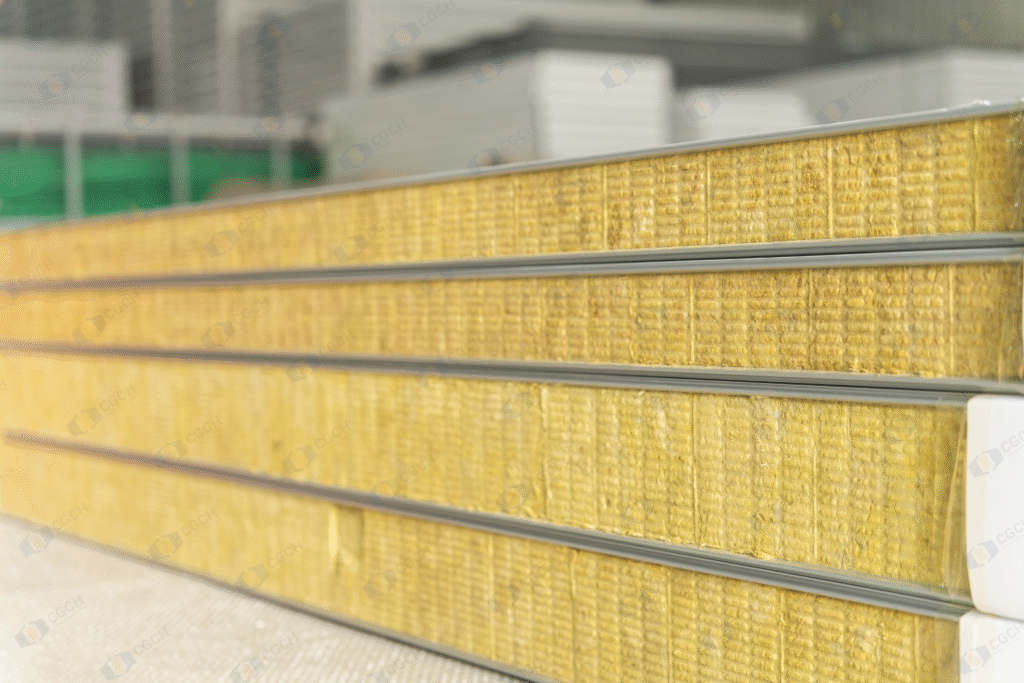
Walls use composite sandwich panels filled with rock wool, polyurethane (PU), or EPS foam. For extreme cold prefab housing, PU panels offer the highest thermal efficiency per millimeter. Rock wool provides strong fire resistance at lower cost and remains the most common specification for large-scale dormitory and workforce housing projects.
Recommended minimum wall thicknesses:
- 100mm — standard cold climates
- 150mm — Siberia, Arctic, Russian Far East, and equivalent extreme-cold regions
2. Window and Door Systems
Windows and doors account for over 30% of total building heat loss. Cold-climate modular units require double-glazed sealed units with low-E coating, high-compression frame seals, and thermal-break profile design to eliminate metal-to-metal cold bridging at every opening. For Arctic applications, triple glazing is available as an upgrade.
3. Roof and Floor Insulation
Heat escapes upward through the roof; cold infiltrates through uninsulated floors. Standard cold-climate configuration uses a 1.5mm galvanized steel roof deck with thickened insulation — substantially above the industry norm of 0.4–0.5mm. Floors use 18mm fireproof cement fiber board with PVC finish over a raised or fully insulated base.
4. Factory-Precision Airtightness
Modular units are prefabricated in controlled factory environments and assembled on-site using standardized connections. Joint sealing is more consistent than site-built construction. Fewer air gaps means lower infiltration heat loss, reduced energy costs, and more stable indoor temperatures over the building’s lifetime.
5 Factors That Determine Winter Comfort in a Prefab Home
| Factor | Specification Range | Recommended for Extreme Cold |
|---|---|---|
| Insulation thickness | 50–150mm | 150mm (Siberia / Russia) |
| Insulation material | EPS / Rock wool / PU | Polyurethane or high-density rock wool |
| Window glazing | Single / double / triple | Double-glazed with thermal-break frame; triple for Arctic |
| Heating system | Central HVAC / underfloor / diesel | Central heating + underfloor provision |
| Installation quality | Site-built vs factory-standardized | Factory prefab with certified on-site assembly |
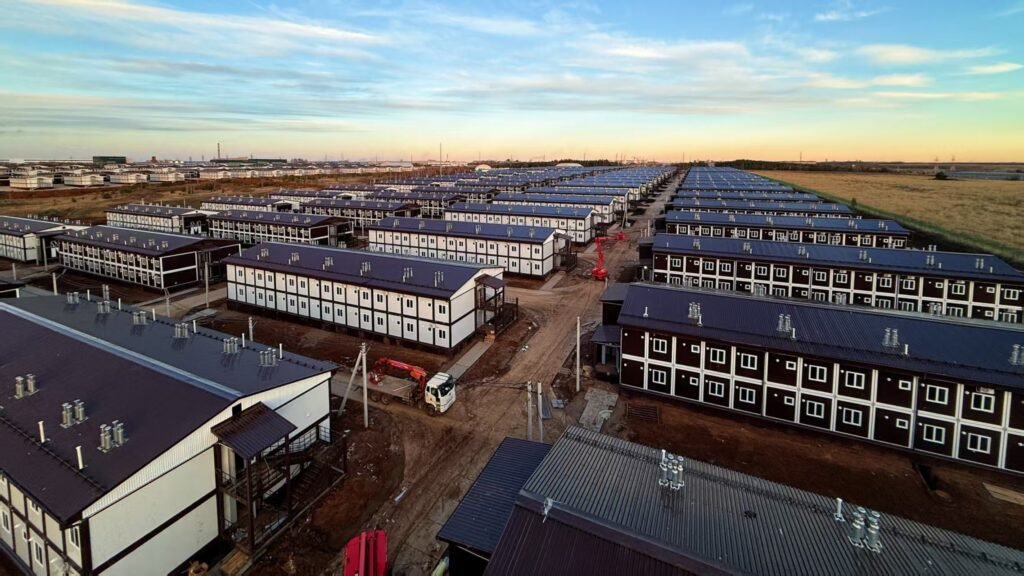
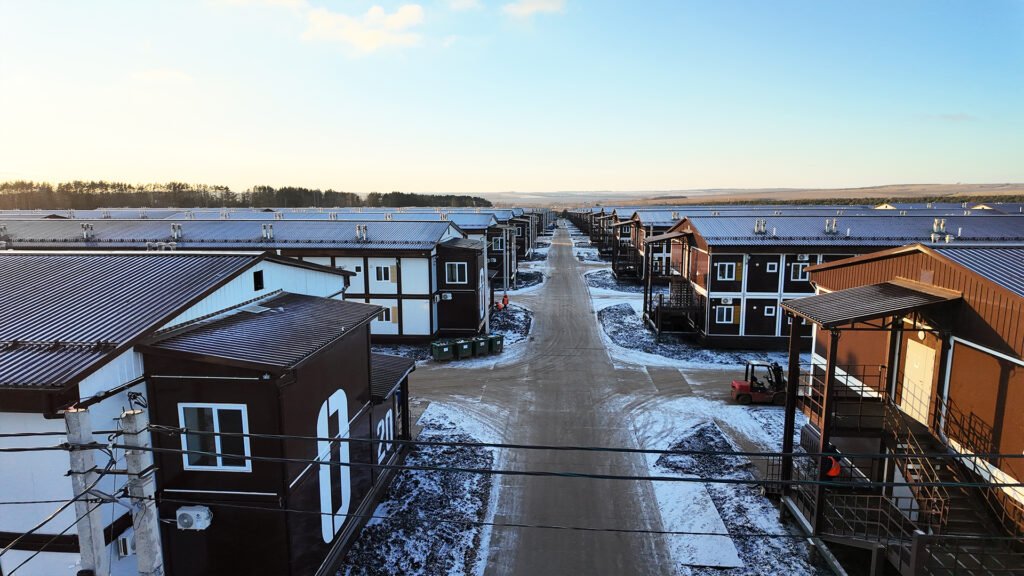
Real-World Proof — CGCH’s 8,000-Unit Prefab Student Housing Project in Russia at -45°C
Project Overview — Alabuga SEZ, Tatarstan, Russia (2024)
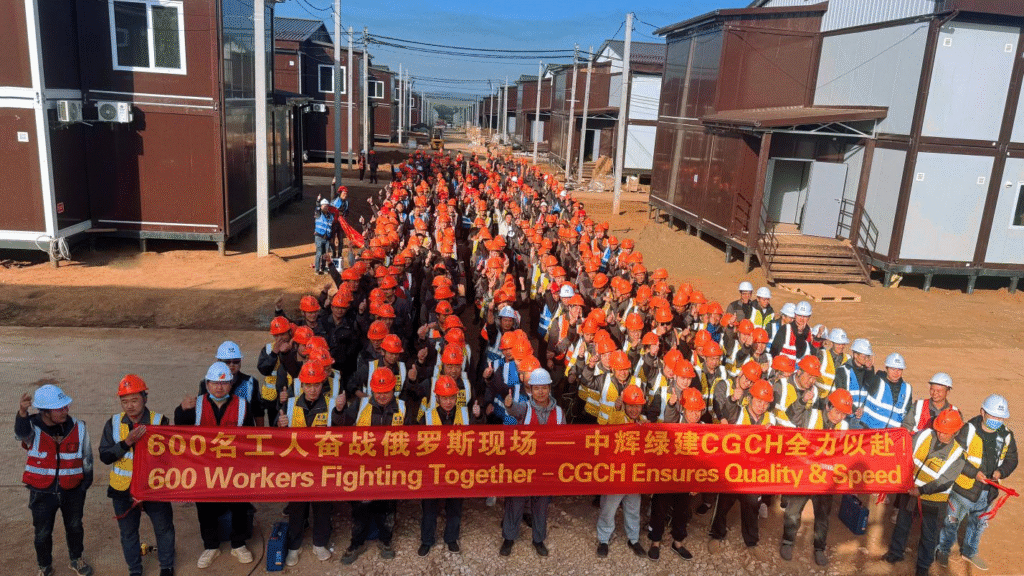
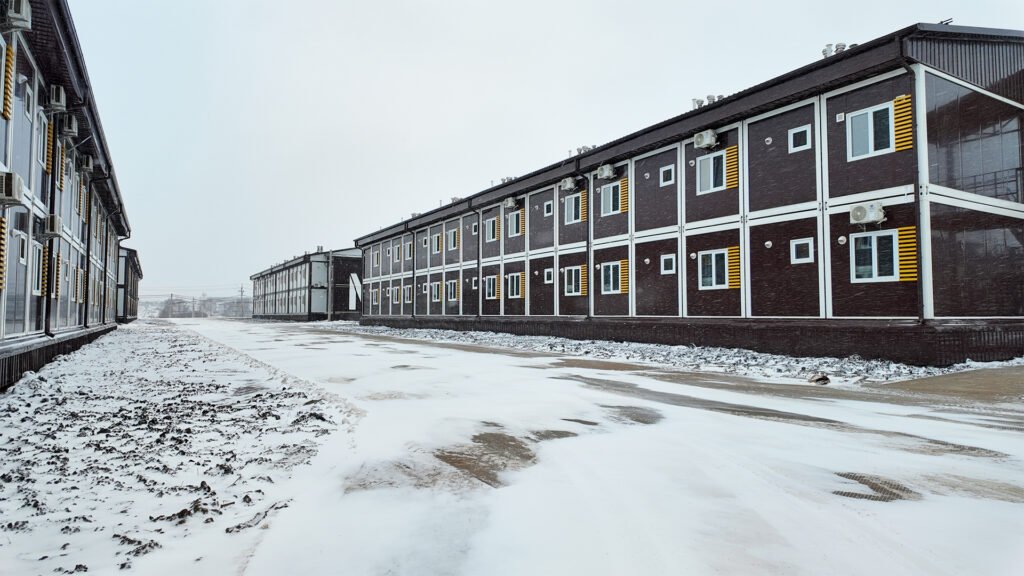
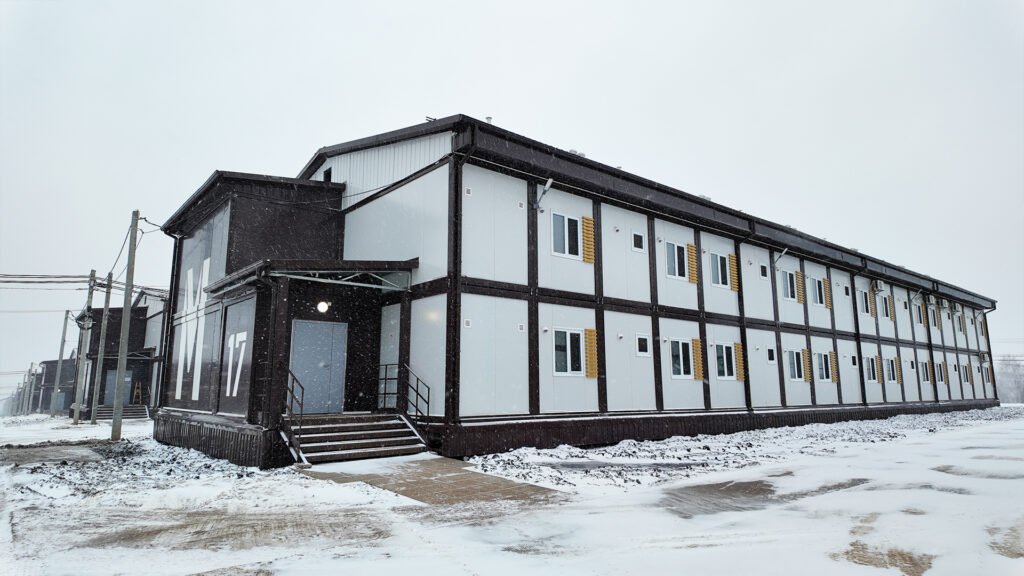
In 2024, CGCH delivered the largest single prefab student housing project in Russia at the Alabuga Special Economic Zone (SEZ “Alabuga”) in the Republic of Tatarstan. With winter temperatures regularly reaching -45°C, the project placed exceptional demands on insulation performance, structural integrity, and construction speed.
Project scope:
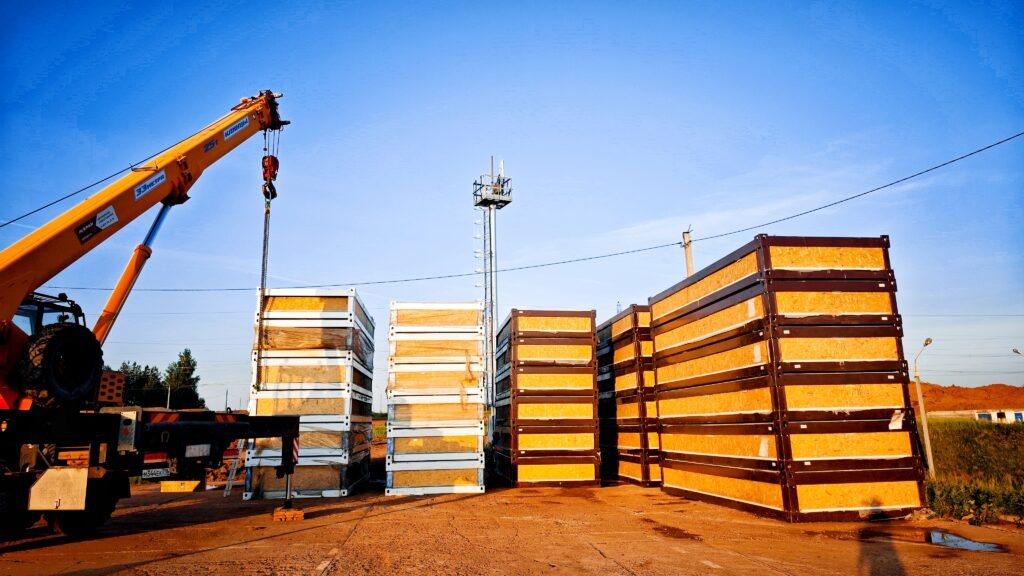
- 8,000 flat-pack container units
- 110,000m² site area
- 600 on-site construction workers
- Validated operating temperature: -45°C
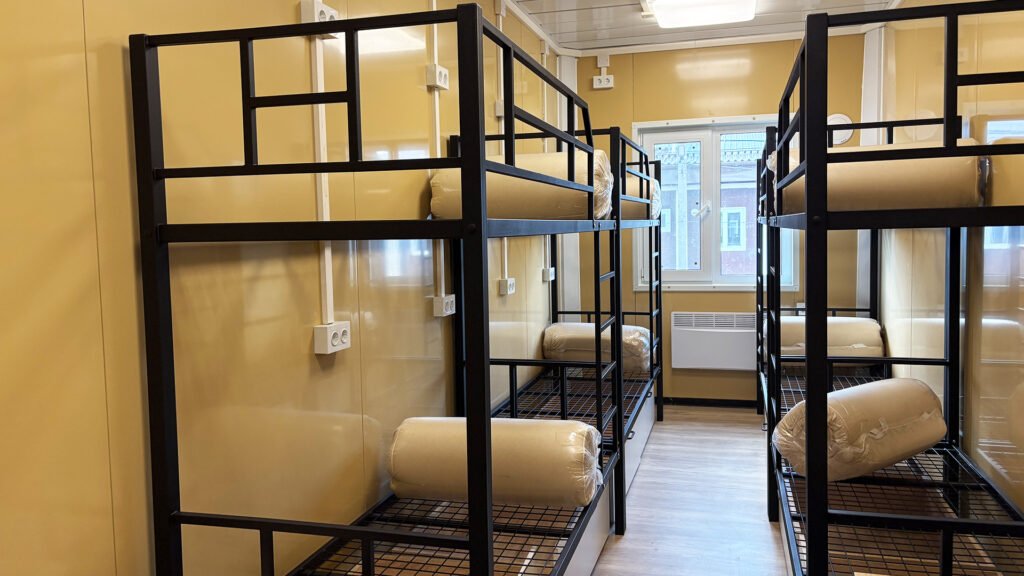
- Application: permanent student dormitory accommodation
Technical Specification Used
- Galvanized cold-formed steel structural frames
- High-density rock wool sandwich panels at extreme-cold thickness
- Thickened roof insulation rated for heavy snow load and foot traffic
- High-performance door and window sealing systems
- Pre-installed central heating connection interfaces
- 360° anti-corrosion coating on all structural steel elements
The Tatarstan project is now in continuous operation as permanent student accommodation. It is the clearest available validation that arctic modular housing can sustain comfortable long-term occupancy in the world’s most demanding winter conditions.
Modular Homes vs. Traditional Brick Buildings in Cold Climates
| Category | Modular Prefab Homes | Traditional Brick Construction |
|---|---|---|
| Insulation performance | Engineered sandwich panels; high-spec units exceed standard brick | Depends on wall thickness; older buildings often under-insulated |
| Heating speed | Fast — airtight envelope warms up quickly | Slow — high thermal mass delays warm-up |
| Energy efficiency | Factory airtightness reduces ongoing heat loss | More joints and gaps; higher infiltration risk |
| Deployment speed | 2–3× faster than site-built construction | Slower; weather-dependent on-site progress |
| Relocatability | Fully relocatable, expandable, reconfigurable | Fixed; modifications expensive |
| Snow load capacity | 1.5mm roof deck engineered for heavy accumulation | Structurally fixed; load depends on original design |
3 Common Misconceptions About Prefab Homes in Cold Climates
Misconception 1 — Modular Houses Are Metal Boxes and Will Always Be Cold
Low-end temporary site cabins can feel cold. Standard insulated modular homes with 100–150mm sandwich panel walls have thermal resistance values that frequently exceed solid brick construction. The outer shell is steel; the insulation core is industrial-grade mineral wool or polyurethane. Specification, not shell material, determines warmth.
Misconception 2 — Prefab Homes Are Only Suitable for Summer or Temporary Use
High-specification cold-climate modular buildings are engineered for year-round permanent occupancy. The 8,000-unit Tatarstan project — student dormitories designed for continuous multi-year use at -45°C — is direct operational evidence.
Misconception 3 — Modular Housing Is Not Appropriate for Russia or Northern Regions
Modular construction is particularly well-suited to extreme-climate projects. Fast deployment, factory-controlled insulation quality, and scalable unit counts are structural advantages where traditional construction is slow, expensive, or logistically impractical. Oil camps, mining accommodations, military stations, and research facilities across Siberia and the Russian Far East have used modular buildings continuously for decades.
How to Select a Modular Home for Russia, Siberia, or Extreme-Cold Regions
Insulation Thickness and Material
- Cold climates: minimum 100mm wall insulation
- Extreme cold (Siberia, Arctic, Russian Far East): 150mm required; polyurethane or high-density rock wool preferred
- Roof insulation: specify thickened layers beyond industry-standard 0.4–0.5mm sheet
Structural System
- Galvanized cold-formed steel frame for corrosion resistance, wind resistance, and seismic stability
- Roof rated for heavy snow accumulation and foot traffic loads
- Seismic Grade 8 minimum recommended for northern deployments
Window and Door Specification
- Double-glazed units with low-E coating as the minimum cold-climate standard
- Triple glazing available for Arctic or sub-Arctic applications
- High-seal frames with thermal-break design — no metal-to-metal contact between interior and exterior
- Minimal air infiltration at all joints and sills
Heating and Utility Integration
- Pre-installed central heating interfaces or underfloor heating provisions
- Integrated HVAC routing built into the modular design — not a retrofit
- Remote or off-grid sites: diesel heater compatibility or mobile heating unit provisions
Customization and Scalability Options
- Adjustable insulation thickness from 50mm to 150mm by project requirement
- Upgraded window and door systems for extreme-cold specification
- Multi-story stacking up to three floors
- Flexible layout configurations for worker camps, student dormitories, offices, and long-term housing
Technical Specifications — CGCH Cold-Climate Modular Units
| Parameter | Specification |
|---|---|
| Unit dimensions | 5,900 × 2,435 × 2,896 mm |
| Frame | Galvanized cold-formed steel, 360° anti-corrosion coating |
| Wall panels | 50–150mm rock wool or polyurethane sandwich panels (150mm for extreme cold) |
| Roof deck | 1.5mm galvanized steel + thickened insulation layer |
| Floor | 18mm fireproof cement fiber board + 1.6mm PVC finish |
| Wind resistance | 45 m/s (typhoon-rated) |
| Seismic rating | Grade 8 |
| Maximum stacking | 3 floors |
| Service life | 20+ years; frame maintenance-free for 15 years |
| Validated operating temperature | -45°C — Tatarstan, Russia (2025) |
Frequently Asked Questions
◆ Can modular homes be used in -40°C or -45°C conditions?
Yes — with extreme-cold specification: 150mm insulation, thermal-break windows, and an integrated heating system. CGCH’s 8,000-unit Tatarstan project has validated continuous operation at -45°C in permanent student dormitory use.
◆ Will a cold-climate prefab home experience condensation or mold?
Not if insulation, vapor barriers, and ventilation are correctly designed. The critical measures are eliminating cold bridges at all structural joints, installing continuous vapor barriers, and ensuring adequate mechanical airflow. All three are addressed in CGCH’s cold-climate configuration standard.
◆ Are heating costs higher in a modular home than in a traditional building?
Well-insulated, airtight modular homes are often more energy-efficient than traditional buildings because factory-sealed joints lose less heat than site-built construction. Running cost depends on insulation specification, heating system efficiency, and local energy tariffs.
◆ What is the difference between a flat-pack container house and a standard shipping container home?
Flat-pack units are manufactured as panel assemblies and constructed on-site, reducing shipping volume significantly while preserving full structural strength and allowing complete specification control over insulation, materials, and layout. CGCH’s flat-pack units support three-floor stacking and multi-directional configuration — neither is possible with repurposed ISO shipping containers.
◆ How long do CGCH modular homes last in extreme-cold environments?
The galvanized cold-formed steel frame carries a 15-year maintenance-free certification with a projected service life of 20 years or more. The 360° anti-corrosion coating performs across climates from -45°C Russian winters to high-humidity tropical environments, validated across CGCH’s international project portfolio.
◆ Conclusion — Specification Determines Performance, Not Structure
Whether a modular home stays warm in winter depends not on whether it is “modular” — it depends on the specification you choose.
The 8,000-unit Tatarstan project proves that with the right engineering configuration, prefab homes can sustain comfortable occupancy at -45°C, delivering reliable, energy-efficient, and cost-effective solutions in the world’s most demanding climates. The same principles apply whether the application is student dormitories, oil and gas worker camps, mining accommodations, or long-term residential housing in extreme-cold regions.
◆ Planning a Modular Housing Project in Russia, Siberia, or an Extreme-Cold Region?
Standard configurations do not meet the demands of extreme environments. Engineered-to-climate design is the only reliable solution.
Contact CGCH for a customized cold-climate specification and project quotation. CGCH has delivered large-scale modular housing for student accommodation, workforce camps, mining sites, and emergency housing across Russia and international markets — from initial specification through final delivery.
Email: CGCH-CEO@cgchcapsulehouse.com
Website: cgchcapsulehouse.com