Looking for a Container House Supplier? Here’s What You Actually Need to Know
If you’re here to figure out whether CGCH is the right fit for your project, here’s the short version:
+Price: Detachable from $1,000/unit (EXW). Expandable from $4,500/unit. Capsule / glamping pods from $12,000/unit.
+MOQ: 1 unit(sample). Volume pricing at 10+ units. Best rates at 100+ units.
+Lead Time: 7–20 days depending on order size.
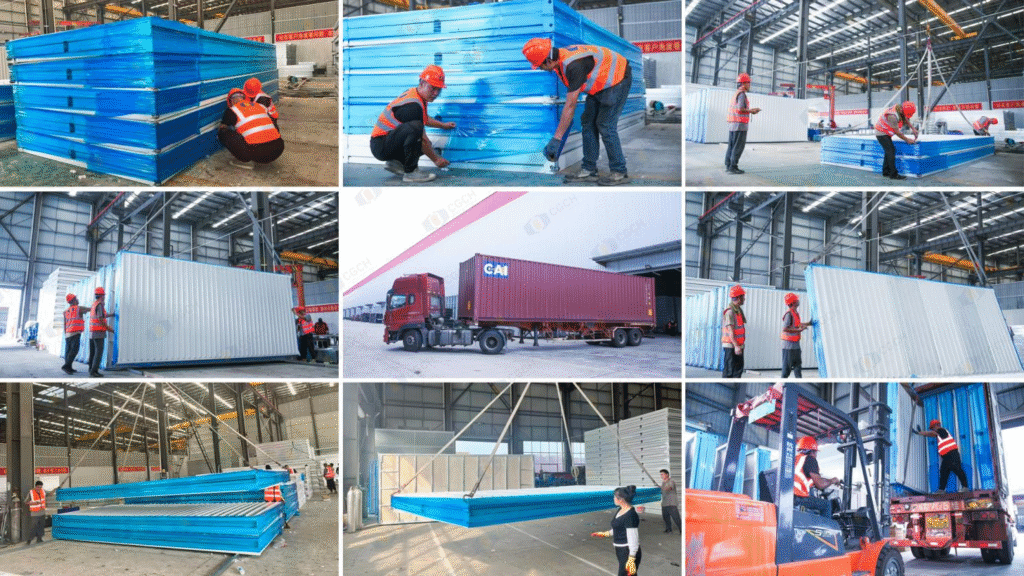
+Shipping: Up to 18 units per 40HQ. Ships to 160+ countries. FOB/CIF/DAP.
+Track Record: Official FIFA World Cup Qatar 2022 supplier. 2,000 units delivered on time, zero complaints.
Full specs, detailed pricing, and the complete case study below.
What Is a Container House and How Does It Work?
A container house — also called prefab container house, modular container home, or shipping container home — is a factory-built structure using steel-framed modular panels. It flat-packs for efficient global shipping and assembles on-site with minimal tools and labor.
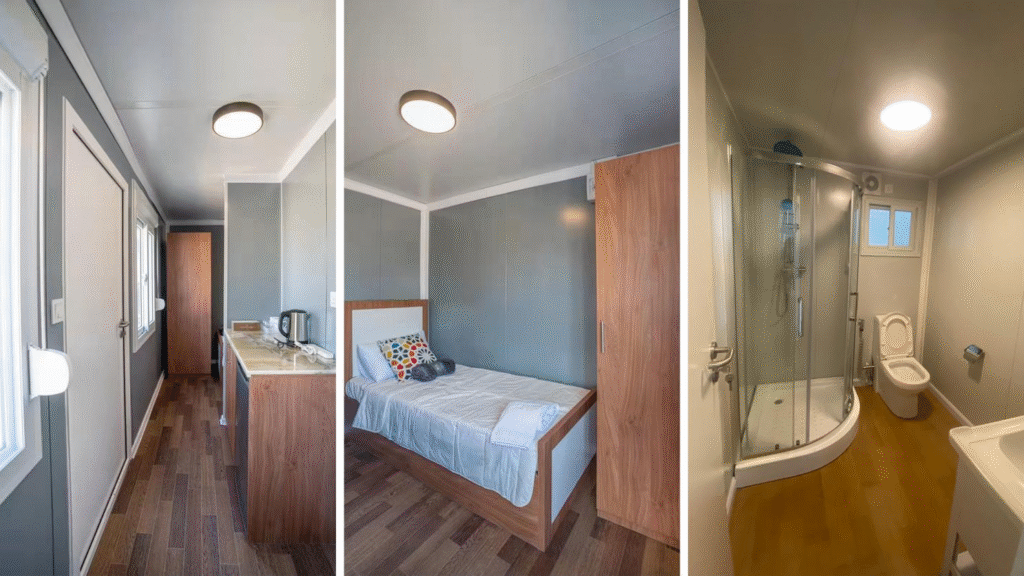
Modern container houses from a professional supplier bear no resemblance to basic site cabins. Today’s units include:
Rock wool or EPS insulation for year-round thermal comfort
Class A fire-rated wall panels — the highest safety classification
Galvanized steel frames engineered for seismic and wind resistance
Full electrical, plumbing, and interior finishing pre-installed at the factory
Modular design — units stack, combine, and reconfigure as needs evolve
How Does It Work in Practice?
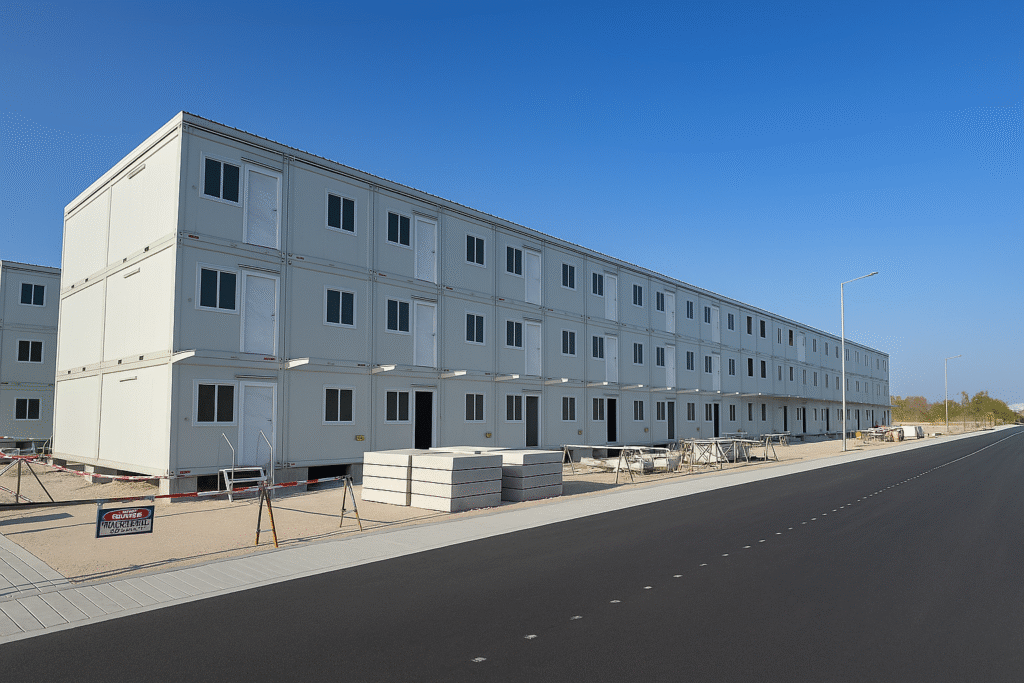
A prefab container house arrives either flat-packed or near-complete. Assembly takes 2–4 hours with a small crew — no welding, no heavy machinery, no specialist trades. Multiple units connect side-by-side or stack to three stories for dormitories, offices, container hotels, and glamping resorts.
The result: a structure meeting international building standards, engineered to last 20+ years, costing 40–60% less than conventional construction. That’s why FIFA, the Olympic Games, and Turkey’s AFAD all turn to container house suppliers when speed, quality, and budget have to work together.
The Case Study: How CGCH Became the FIFA World Cup Container House Supplier
While Messi and Mbappé chased history on the pitch, a different kind of record was being set just miles from Lusail Stadium.
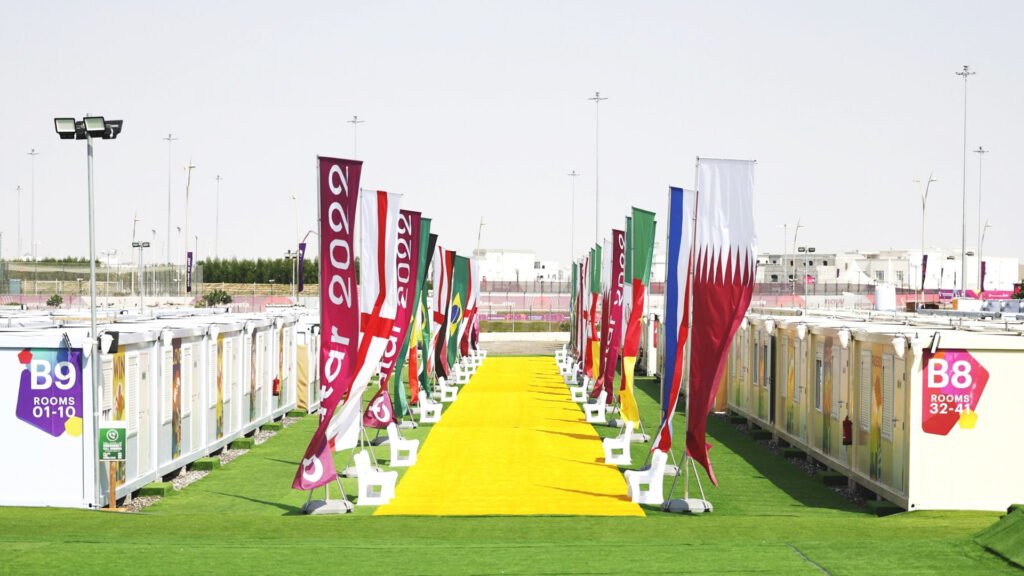
In the desert outskirts of Doha, a fully operational temporary city rose from the sand — 2,000 modular container houses serving the 1.2 million fans who arrived for the 2022 FIFA World Cup. Dormitories, restaurants, retail shops, restrooms, reception centers — a complete urban ecosystem, manufactured in China, shipped across the ocean, delivered without a single delay or complaint.
The supplier behind it? CGCH — a Guangzhou-based manufacturer that became one of the global construction industry’s most discussed names almost overnight.
What Made the World Cup Call a Container House Supplier?
Qatar covers 11,571 square kilometers with a population under 3 million. In 2022, it absorbed over 1.2 million international visitors in weeks. Hotels buckled. Room prices climbed past ten times normal rates. The organizing committee faced a housing crisis with a hard deadline — and no conventional solution.
Traditional construction was off the table: not enough time, not enough labor, not enough existing stock. What organizers needed was a supplier capable of manufacturing, shipping, and deploying thousands of fully functional modular buildings — move-in ready, built for extreme desert heat, operational faster than anything conventional could deliver.
CGCH won the contract by demonstrating exactly that capability.
2,000 detachable container houses were deployed across five zones: fan dormitories, themed restaurants, retail shops, public restrooms, and event reception centers. From contract signing to full delivery, CGCH mobilized multiple factories simultaneously — completing what many called an impossible task, at Chinese manufacturing speed, with zero compromise on quality.
The CGCH Founder Speaks
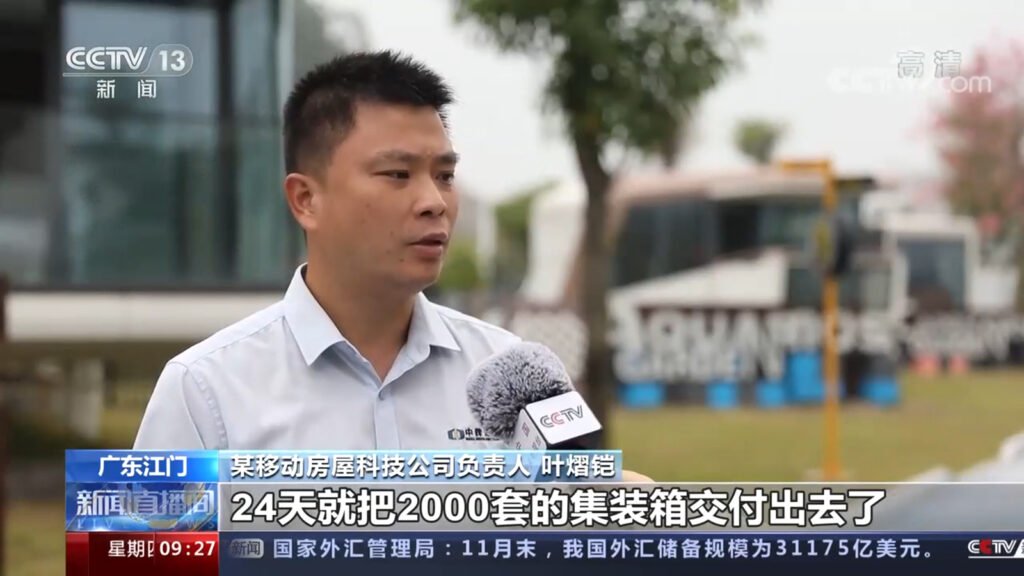
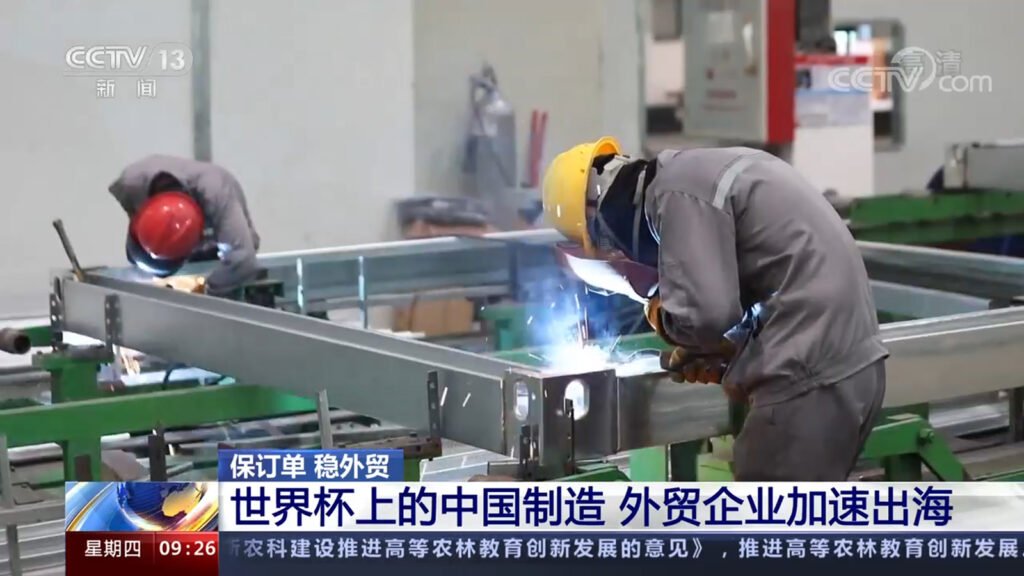
Shortly after delivery, China’s CCTV-13 national news channel sent a crew to CGCH’s headquarters and production base to interview founder Mr. Ye — one of the most candid on-record conversations about prefab container house manufacturing ever aired on Chinese national television.
On the project’s biggest challenge:
“For us, the hardest part wasn’t production volume — we can scale that. It was time. The World Cup doesn’t move its opening date for anyone. We ran multiple factories simultaneously — Foshan, Huainan, Wuhu, and Suzhou working in parallel — built a dedicated quality inspection and export logistics pipeline from scratch, and delivered 2,000 units with zero delays and zero quality complaints. That’s what proves a container house supplier can perform at the world’s highest level.”
“When most people hear ‘container house,’ they picture a flimsy temporary structure. What CGCH supplies is completely different. Our prefab buildings meet Class A fire resistance, Grade 12 wind resistance, Grade 8 seismic rating — engineered lifespan over 20 years. When World Cup fans walked into our container hotel rooms, their first reaction was: ‘This is so much nicer than I expected.’ That perception gap is what we’ve spent 15 years closing.”
“Traditional construction faces mounting pressure — cost, timelines, labor shortages, environmental regulations. Prefab container houses address every one of those pain points simultaneously. China has built the world’s most complete supply chain, the most refined production processes, and the deepest project track record in this field. We’re not catching up to the world. We’re ahead of it.”
15 Years, 160 Countries — The CGCH Track Record
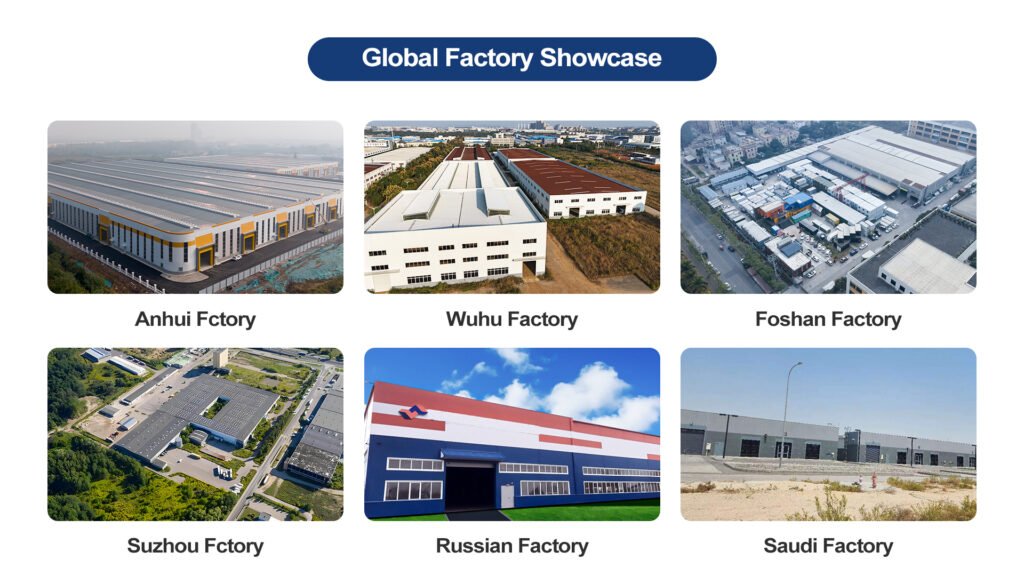
Founded in Guangzhou in 2010, CGCH now operates 8 factories across two continents, with 420,000㎡ of production space and monthly output exceeding 6,000 units.
Year
Milestone
2010
CGCH founded — prefab container house R&D begins
2020
First robotic production line (200 units/day); Wuhan emergency housing
2021
Southeast Asia projects completed; CE certification achieved
2022
Official FIFA World Cup Qatar supplier — 2,000 units; Beijing Winter Olympics
2023
Turkey AFAD partner — 2,000 earthquake shelter units
2025
Russia Alabuga: 8,000-unit modular worker camp, ~$80M USD contract
Today, CGCH exports to 160+ countries, holds 80+ patents, and counts Tata Group, Huawei, Starbucks, and the Olympic Games among its partners. Certifications include CE, ISO 9001, SAA, UL, CQC, and CSI.
Global Factory Network — 8 Production Bases Across 2 Continents
What separates a world-class container house supplier from a basic trading company isn’t just product quality — it’s manufacturing depth and geographic reach.
China — 4 Core Bases
CGCH’s four China-based factories are located in Foshan (Guangdong), Wuhu (Anhui), Suzhou (Jiangsu), and Huainan (Anhui). These facilities run robotic welding arms, automated powder-coating systems, and ABB robot assembly equipment continuously to meet global demand. All hold CE, ISO 9001, SAA, UL, CQC, and CSI certifications.
Overseas — 4 Strategic International Bases
Beyond China, CGCH operates dedicated prefab container house facilities in Saudi Arabia, Russia, Thailand, and Indonesia — strategically positioned to serve the Middle East, Central Asia, and Southeast Asia with shorter supply chains, faster delivery, lower freight costs, and on-the-ground technical support in your time zone.
What Makes This Container House Supplier Different
The detachable container house used in the World Cup project is CGCH’s highest-volume export product. Qatar’s delivery gave buyers worldwide concrete proof of what these units can withstand.
① Installs in 3 hours. Four workers, bolt assembly, no welding, no heavy equipment. Speed that wins contracts.
② Ships 18 units per 40HQ. 200% more than conventional alternatives. Logistics costs drop 30%+. At scale, that’s a very significant number.
③ Proven in extreme conditions. Class A rock wool panels, fully sealed waterproofing, galvanized anti-corrosion steel frame. Desert heat, Siberian winters, tropical humidity — the same product line handles it all.
④ Scales in every direction. Single cabins to multi-building hotel complexes. The same system that built Qatar’s fan village also built Beijing’s Olympics control room and glamping resorts across Inner Mongolia.
⑤ Built for 20+ years, 50+ moves. Engineered for minimum 50 relocation cycles over a 20-year service life. Zero construction waste, genuinely sustainable.
Which Prefab Container House Is Right for Your Project?
Not all container houses work the same way. Here’s how CGCH’s four core product types compare:
You want the most livable single-unit experience. Opens to nearly 6 meters wide — genuine residential comfort. The natural choice for boutique hotels, homestays, and residential use.
You’re building a premium destination resort that commands attention — and premium nightly rates. Successfully deployed in Saudi Arabia, Thailand, and Inner Mongolia.
Why Choose a Container House Supplier Over Local Construction?
Here’s the honest comparison:
Factor
Local Traditional Construction
Prefab Container House Supplier
Build Time
3–12 months
3 hours to 20 days
Cost
Baseline
40–60% lower
Quality Control
Variable, weather-dependent
Factory-controlled, consistent
Relocatability
Permanent
50+ moves over 20 years
Waste
High
Near zero
Skilled Labor
Significant
Minimal — bolt assembly
Certifications
Local only
CE, ISO, UL, SAA — globally recognized
The answer isn’t always “container house wins.” For permanent flagship buildings in prime urban locations, traditional construction has its role. But for the vast majority of commercial, hospitality, and accommodation projects — particularly across Africa, the Middle East, Southeast Asia, and remote regions — a prefab container house supplier delivers what conventional construction cannot match on timeline, budget, or flexibility.
Three Scenarios Where a Container House Supplier Wins Decisively
① Large-scale worker accommodation. Construction camps, mining sites, oil and gas facilities — anywhere you need to house hundreds or thousands of workers quickly. CGCH’s modular camps have been deployed from the Congolese mining belt to the Russian Arctic.
② Hospitality and tourism development. Boutique hotels, glamping resorts, eco-lodges — the container hotel format is now global. A prefab supplier delivers a 50-room resort in weeks, not 18–24 months.
③ Emergency and disaster relief. When speed is the difference between life and death, no construction method approaches prefab. CGCH supplied 2,000 emergency units to Turkey’s earthquake zones within weeks of the 2023 disaster.
Global Projects — Case Studies Across Six Continents
The FIFA World Cup is CGCH’s most high-profile project — but it’s one delivery in a 15-year track record spanning six continents.
Africa — Worker Accommodation at Scale
CGCH has supplied modular worker camps across Nigeria, Congo, Angola, and East Africa — primarily serving mining, infrastructure, and oil and gas operations. Typical projects run 50 to 5,000+ units with full camp facilities.
Middle East — Emergency Shelter to Luxury Glamping
Beyond the World Cup, CGCH has delivered temporary housing for construction camps across Saudi Arabia, UAE, and Qatar, plus glamping resorts targeting the region’s growing domestic tourism market. All units use dedicated thermal configurations for temperatures exceeding 50°C.
Southeast Asia — Hospitality and Tourism
Indonesia, Philippines, Cambodia, Thailand, and Vietnam have all received CGCH container hotels and glamping pods. Expandable container houses are particularly popular — delivering boutique resort experiences at a fraction of traditional construction costs.
Latin America — Residential and Commercial
Argentina, Chile, and Brazil projects cover residential housing, commercial retail spaces, and eco-tourism accommodation. CGCH’s capsule house range has proven strong in Latin America’s fast-growing glamping market.
Russia and Central Asia — Industrial Modular Worker Camps
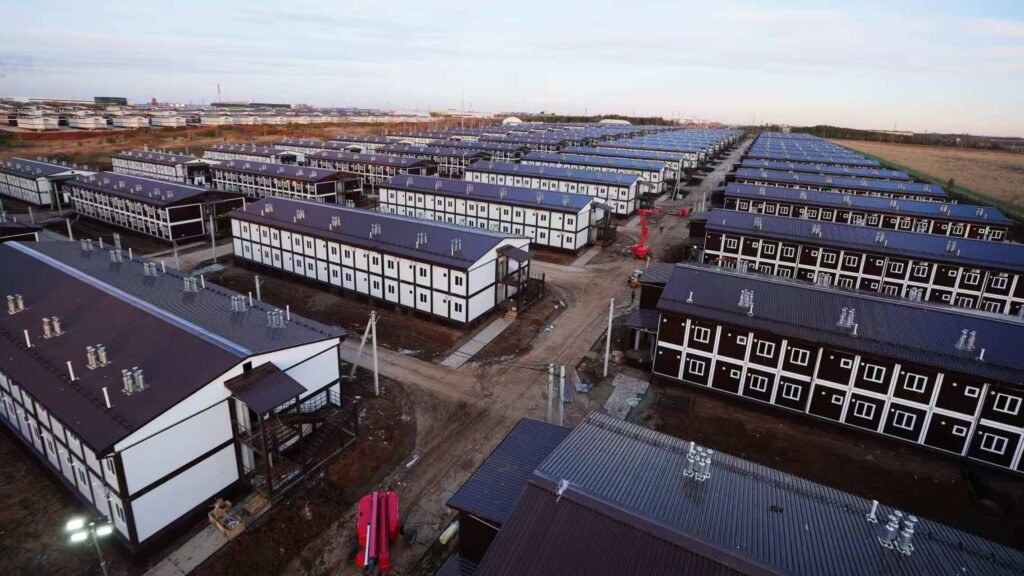
CGCH’s largest single contract: 8,000 modular container house units across 84 buildings at Russia’s Alabuga Special Economic Zone — engineered for extreme cold weather, valued at approximately $80M USD.
Sourcing prefab container houses from China raises legitimate questions about quality. Here’s what CGCH’s certification portfolio covers:
Certification
Coverage
Key Markets
CE (EN 1090)
Steel structure compliance
EU 27 countries
ISO 9001:2015
Quality management
Global
SAA
Electrical safety
Australia / NZ
UL
Electrical component safety
North America
CQC
Electrical device certification
China + export
CSI
Safety glass
Australia
CGCH holds 80+ registered patents covering waterproofing systems, structural connections, floor frame design, and roof panel technology. Raw steel is sourced from Liugang Group — one of China’s top five steel producers — with full material traceability certificates provided with every shipment.
How to Install a Prefab Container House — Step by Step
First-time buyers often ask: “Can my local team install these without specialist help?” The answer is almost always yes.
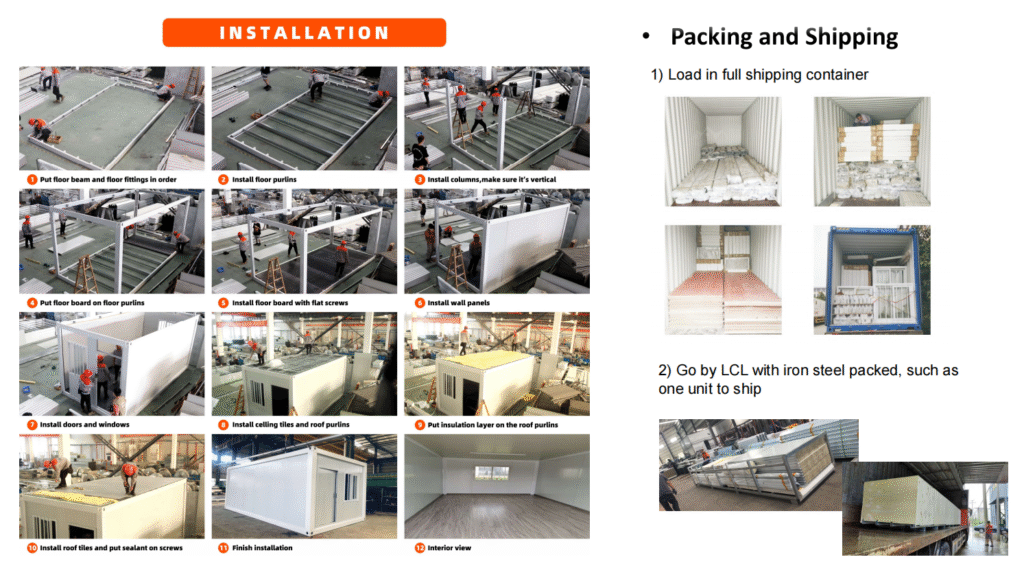
1️⃣ Lay floor beams and fittings on prepared ground 2️⃣ Install floor purlins across the base frame 3️⃣ Install columns — verify vertical alignment 4️⃣ Place floor boards onto purlins 5️⃣ Secure floor boards with flat screws 6️⃣ Install wall panels on all sides 7️⃣ Install doors and windows into designated openings 8️⃣ Install ceiling tiles and roof purlins 9️⃣ Apply insulation layer across roof purlins 🔟 Install roof tiles, apply weatherproof sealant at all joints 1️⃣1️⃣ Final checks — bolt torque, panel alignment, seal integrity 1️⃣2️⃣ Interior ready for immediate occupancy
No welding, no crane, no forklift. Standard hand tools only. Every CGCH prefab container house ships with bilingual installation manuals and video tutorials. For orders of 100+ units, we can dispatch a technical engineer to supervise on-site installation.
💡 Starting reference prices only. Final cost varies by configuration, quantity, and destination port. Compared to conventional construction, CGCH prefab container houses deliver 40–60% savings on total build cost.
②MOQ — Minimum Order
Order Size
Pricing
What’s Included
From 1 unit
Standard rate
Full product, documentation, support
10+ units
Volume discount
Mixed product types eligible
100+ units
Best project pricing
On-site installation supervision
💡 First-time buyers: start with 1–2 sample units, verify quality, then scale up. Sample orders get the same level of service as large contracts.
③Lead Time — How Fast Can a Supplier Deliver?
Order Volume
Standard Lead Time
1–10 units
Within 7 business days
10–50 units
7–15 business days
50+ units
15–20 days (by arrangement)
💡 8 factories running globally. Combined monthly output exceeds 6,000 units. Emergency orders can activate accelerated production — compressing lead times by 30–40%. The Qatar World Cup delivery — 2,000 units, zero delays — remains the industry benchmark.
💡 FOB, CIF, and DAP available. Full export documentation included. Marine cargo insurance arranged. CGCH ships to buyers in Nigeria, Dubai, Philippines, Australia, Argentina, and 50+ countries every month.
Solar off-grid / smart locks / halal kitchen / accessibility features
💡 How it works: Submit requirements → design proposal within 3–5 business days → confirm pricing → production begins. Dedicated project team from first enquiry to final delivery.
A: CGCH detachable units are engineered for 20-year service life under normal conditions. Capsule houses use aircraft-grade aluminum alloy rated for 30+ years with zero routine maintenance. All structural lifespans backed by CE and ISO 9001 certification.
A: Yes — with the correct configuration. CGCH supplies dedicated hot-climate units with enhanced rock wool insulation (75mm+), reflective roof coatings, and optimized ventilation. The Qatar World Cup project — operational in 45°C+ — is proof.
Near the end of the CCTV-13 interview, the reporter asked CGCH founder Mr. Ye what the company truly stands for. He answered without hesitation:
“I ask myself this constantly: what makes a construction company genuinely good? It isn’t building the tallest towers or the most expensive structures. It’s getting the right space to the right people, at the right time, at a price that doesn’t exclude them. World Cup fans needed somewhere to stay. Earthquake survivors in Turkey needed a home. Construction workers in Africa needed decent worker accommodation. A traveler on a Pacific island needed a glamping pod worth staying in. These situations look completely different on the surface. But at the core, they’re all asking the same question: how do we create spaces where people can live with dignity? That’s why CGCH exists. We’re not just building container houses. We’re building the conditions for people to build their own futures.”
The FIFA World Cup project put CGCH on the global map — but it was one delivery in a 15-year track record spanning earthquake relief, Olympic infrastructure, industrial camps, luxury glamping destinations, and large-scale worker camps across six continents.
CGCH is actively building its global distributor and agent network — with priority focus on Africa, the Middle East, Southeast Asia, Australia, and Latin America.
From the Wuhan emergency housing project to the FIFA World Cup container hotel village. From the Beijing Winter Olympics to the earthquake zones of Turkey. From an 8,000-unit worker camp in Russia to glamping resorts across six continents — every CGCH project is a proof point that goes beyond the structure itself.
What CCTV-13’s cameras captured wasn’t just a manufacturer celebrating a contract. It was a window into how Chinese industry has quietly redefined what global modular construction can deliver — faster timelines, lower costs, less waste, and engineering quality the rest of the world is still learning to recognize.
The prefab container houses standing in Qatar’s desert during the 2022 World Cup delivered a message that needed no translation:
The world’s most trusted container house supplier isn’t in Europe. It isn’t in America. It’s in China. And it ships directly to your project site.